I was visiting Phanom Rung Historical Park in Thailand’s Buriram province in July 2024 when I learned of the death of a wild tiger (suea in Thai) in nearby Non Din Daeng.


Villagers spotted the tiger in the vicinity of a dam adjacent to the Dong Yai National Forest Reserve. The sighting panicked the community, particularly after the tiger attacked and injured a cow.
According to Thai.News:
The saga began on Friday when the tiger’s injuries were first reported. Authorities, in collaboration with seasoned local veterinarians, crafted a meticulous plan to rescue the ailing big cat. However, before the plan could come to fruition, the tiger was discovered in a severely weakened state—its breaths shallow, its frame skeletal. Despite the best efforts to save it, the regal animal succumbed to its condition, slipping away from the land it once roamed freely.
An initial examination of the tiger’s remains revealed a puzzling lack of external injuries. To dispel the uncertainty surrounding its death, a detailed autopsy will be conducted, aiming to uncover the true cause and bring clarity to its untimely demise.
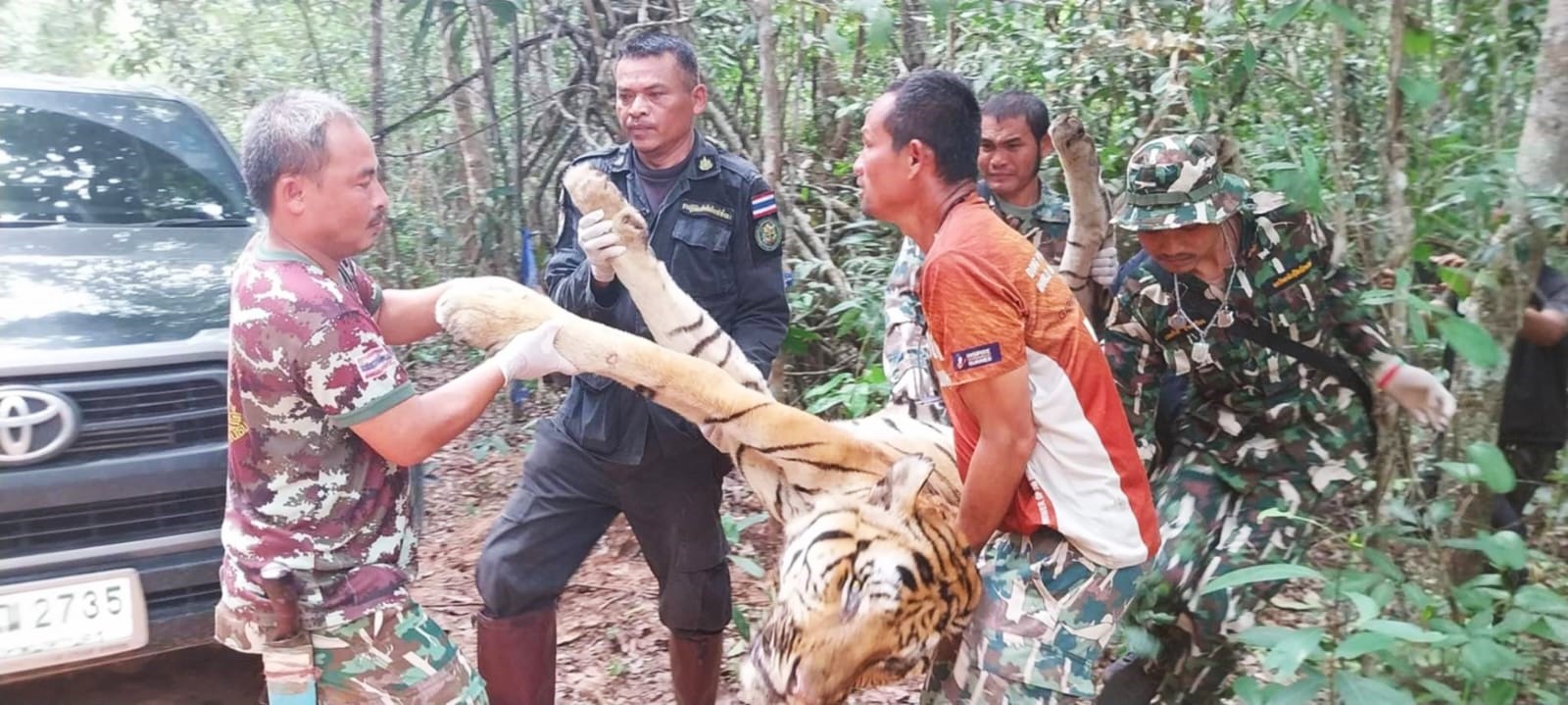
At first I suspected that the tiger had been shot. However, the lack of external injuries and the tiger’s weakened condition, if accurate, suggests that blame may lie with natural causes. The tiger was identified as M116 through comparison of his stripes with a photographic database.
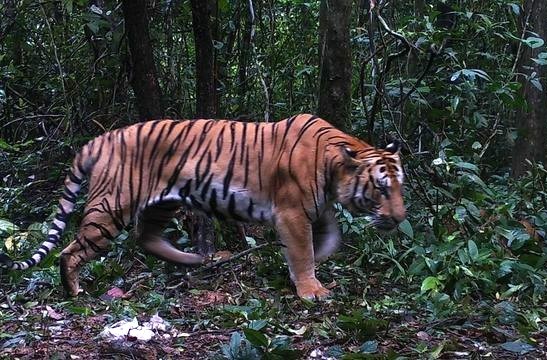
The good news is that the world Wildlife Fund reports that, due to concerted conservation efforts, Thailand’s wild suea population, while small, continues to grow. The population is currently estimated to be 179-223 tigers. I didn’t know tigers still roamed remote areas of Thailand’s heavily forested terrain. Tigers are considered extinct in Cambodia, Laos, and Viet Nam.
Thanks for reading this edition of Silent Sunday and putting up with my penchant for alliteration. RIP M116.
Tiger photos courtesy of Thai. News.
 Salsaworldtraveler'sblog